
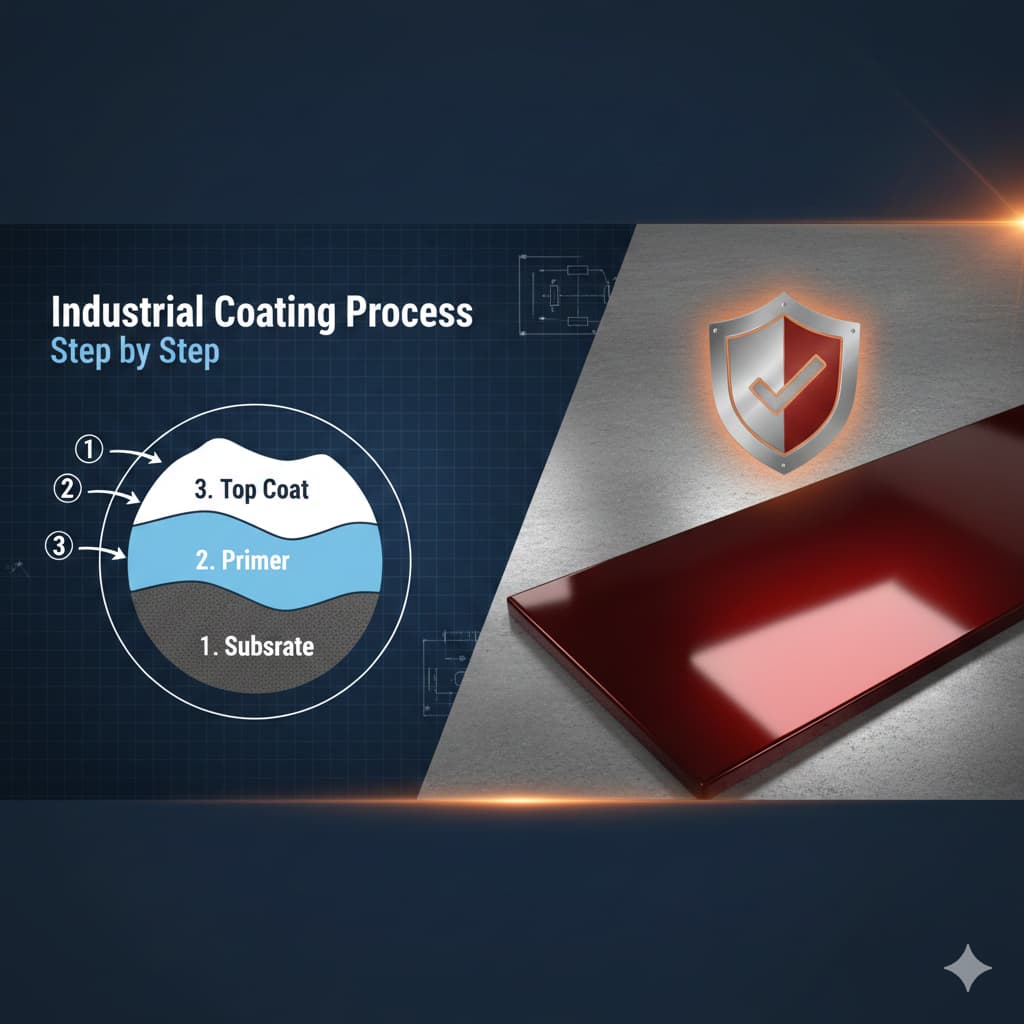
Industrial Coating Process Step by Step: Complete Professional Guide
You need a systematic industrial coating process to protect your substrates from corrosion, chemical damage, and environmental degradation. This comprehensive guide walks you through every critical stage—from planning and surface preparation to application, curing, and long-term maintenance—ensuring your industrial coatings deliver maximum durability and performance.
Planning & Project Setup for Industrial Coating Services
Define Scope and Performance Requirements
You must identify your coating's operating environment before selecting materials. Consider chemical exposure levels, temperature ranges, abrasion potential, and expected service life. Your project should meet recognized standards such as SSPC (Society for Protective Coatings) or NACE (National Association of Corrosion Engineers) specifications. Many professionals ask whether their environment requires corrosion resistant industrial coating or high temperature industrial coating—the answer depends on your specific exposure conditions.
Select Appropriate Industrial Coating Systems
Matching your substrate and environment to the correct coating family prevents premature failure. Epoxy industrial coating provides excellent adhesion and chemical resistance for interior applications, while polyurethane industrial coating offers superior UV resistance for outdoor exposure. Powder industrial coating delivers exceptional durability through electrostatic application, and fluoropolymer industrial coating resists extreme temperatures and aggressive chemicals. Silicone industrial coating maintains flexibility across wide temperature ranges.
Your coating system typically consists of three layers: a primer for adhesion and corrosion prevention, an intermediate coat for thickness and protection, and a topcoat for environmental resistance and aesthetics. Working with an experienced industrial coating company ensures proper material selection based on substrate compatibility and performance requirements.
Budget, Timeline, and Logistics
You should account for access requirements, scaffolding needs, operational downtime, and environmental controls. Temperature and humidity significantly affect coating performance—most systems require specific application windows. Consider disposal procedures for blast media and coating waste, and secure necessary permits before starting work. Finding the right industrial coating near me can reduce transportation costs and improve project coordination.
Safety & Regulatory Considerations
Your team must use appropriate personal protective equipment, establish adequate ventilation, review material safety data sheets, obtain hot work permits when necessary, and follow confined space protocols. Industrial coating suppliers provide detailed safety information with their products.
Surface Assessment & Inspection Before Industrial Coating Application
Visual Inspection and Measurement
You need to examine existing coatings, rust formation, pitting, weld spatter, contamination, and dimensional tolerances. Document surface conditions with photographs and measurements. This step determines whether you can overcoat existing finishes or must remove them completely.
Testing for Contaminants
Salt contamination, measured through conductivity tests, prevents proper adhesion. Oil and grease require solvent cleaning before coating. Moisture presence causes blistering and delamination. Field testing identifies these issues before they compromise your coating system. Professional industrial coating inspection catches problems early.
Determine Required Surface Profile and Cleanliness Level
Specify SSPC or NACE cleanliness targets—near-white blast (SSPC-SP 10), white metal blast (SSPC-SP 5), or commercial blast (SSPC-SP 6). The surface profile depth, measured in micrometers or mils using replica tape, ensures mechanical anchoring for your coating. Different coating types require specific profile ranges for optimal adhesion.
Surface Preparation: The Critical Foundation of Industrial Coating Equipment
Surface preparation determines 80% of coating performance. Inadequate preparation causes adhesion failure, blistering, and premature coating breakdown regardless of material quality.
Mechanical Methods for Metal Industrial Coating
Abrasive blasting with shot, grit, or sand removes contaminants and creates the required surface profile. Grinding removes localized defects and welds spatter. Sanding smooths surfaces before finishing. You should verify profile depth using replica tape and check cleanliness visually according to SSPC standards. Industrial spray coating equipment often requires specific surface profiles for proper adhesion.
Chemical & Wet Methods
Degreasing with alkaline cleaners removes oil and grease. Solvent wiping eliminates light contamination. Acid pickling removes mill scale and rust from steel surfaces. Phosphating and conversion coatings provide additional corrosion protection on metals. You must rinse thoroughly to prevent chemical residues from interfering with adhesion.
Specialized Activation and Pretreatments
Plasma activation enhances adhesion on plastics and composites. Anodizing creates a protective oxide layer on aluminum. Zinc electroplating provides galvanic protection before coating. These methods suit specific substrate and environment combinations.
Drying and Contamination Control
Monitor dew point and humidity levels continuously during surface preparation. The substrate temperature must remain at least 3°C above the dew point to prevent moisture condensation. Use salt-free verification methods before coating. Tack cloths remove dust particles. Clean room conditions benefit sensitive applications like aerospace components.
Primer & Pre-coating Steps for Concrete Industrial Coating
Why Primers Matter
Primers promote adhesion between the substrate and topcoat, prevent underfilm corrosion, and ensure compatibility across coating layers. Your coating system fails without proper primer selection and application.
Primer Selection
Zinc-rich primers provide galvanic protection to steel substrates. Epoxy primers offer excellent adhesion and moisture resistance. Tie coats bridge incompatible coating systems during repair work. Select primers based on substrate type, environmental exposure, and topcoat compatibility.
Masking and Protection
Protect adjacent areas, gaskets, instrumentation, and bolted faces with appropriate masking materials. Remove masking promptly after coating but before full cure to prevent adhesion issues. Professional industrial coating equipment includes masking supplies for precise application boundaries.
Industrial Coating Application Methods
Spray Application
Airless spray systems pump coating at high pressure through small nozzles, creating fine atomization. Conventional spray uses compressed air for atomization. HVLP (high volume low pressure) reduces overspray and improves transfer efficiency. Electrostatic spray charges coating particles, attracting them to grounded substrates for improved coverage and reduced waste.
You control film thickness by adjusting pressure, nozzle size, spray distance, and application speed. Multiple thin coats outperform single thick applications. Proper technique prevents runs, sags, and dry spray.
Powder Industrial Coating Process
Electrostatic powder coating applies dry powder particles charged to attract to grounded metal substrates. You cure the coating in an oven at temperatures between 160°C and 210°C, where powder particles melt, flow, and crosslink into a durable finish. This method provides excellent finish quality, environmental benefits through zero VOC emissions, and minimal waste through overspray recovery.
Powder coating requires proper substrate preparation, consistent powder particle size, correct oven temperature profiles, and adequate cure time. The process works best on metal substrates that withstand baking temperatures.
Dip and Immersion Coating
Immersion coating covers complex geometries completely, reaching recesses that spray cannot access. You immerse the substrate in coating material, remove it at controlled rates, and allow excess material to drain. This method ensures complete coverage but requires careful thickness control through viscosity management and withdrawal speed.
Brush, Roll, and Flow Coating
Brush application suits small repairs, touch-ups, and areas spray equipment cannot reach. Rolling works efficiently on large flat areas like concrete industrial coating applications. Flow coating allows gravity distribution over horizontal surfaces. These methods require proper technique, correct material viscosity, and appropriate tools for film thickness control.
Specialized Deposition
Physical vapor deposition (PVD) creates thin, dense coatings through material vaporization in vacuum chambers. Electrocoating (e-coating) uses electrical current to deposit paint particles onto conductive substrates, providing uniform coverage on complex shapes. Thermal spray applies molten materials through high-velocity impact. These specialized methods suit specific industrial applications requiring unique properties.
Mixing, Pot Life & Application Controls for Pipeline Industrial Coating
Reading Product Data Sheets
Product data sheets specify mix ratios, induction time, acceptable temperature ranges, humidity limits, and pot life. You must follow these parameters precisely. Deviations cause improper cure, reduced performance, and coating failure. Many professionals ask about mixing multi-component systems—the answer lies in carefully following manufacturer specifications.
Mixing Techniques & Equipment
Mechanical mixers ensure thorough blending of multi-component coatings. Continuous proportioners deliver precise mix ratios for large projects. Agitators prevent settling during application. You should mix only the quantity usable within pot life limits.
Controlling Wet Film Thickness and DFT
Wet film thickness (WFT) relates to dry film thickness (DFT) through the volume solids percentage. Use wet film gauges during application to verify proper coverage. Target DFT requirements vary by coating layer—primers typically need 50-100 micrometers, while topcoats may require 75-150 micrometers depending on exposure severity. Industrial coating removal becomes necessary when incorrect thickness causes performance issues.
Curing, Drying & Post-application Handling for Tank Industrial Coating
Curing Mechanisms
Evaporation-cure coatings dry as solvents evaporate into the atmosphere. Crosslinking systems form chemical bonds between polymer chains, creating a dense network. Catalyst-activated coatings undergo chemical reactions that strengthen the film. UV-curing coatings polymerize under ultraviolet light exposure. Each mechanism has specific time, temperature, and environmental requirements.
Oven Bake vs Ambient Cure
Oven curing accelerates chemical reactions, reduces cycle times, and improves coating properties. You must consider substrate thickness and thermal limitations—heavy sections heat slowly while thin parts may distort. Ambient cure suits field applications where oven access is impossible but requires longer cure times and proper environmental conditions.
Post-cure Inspection Intervals and Handling Precautions
Coatings pass through distinct stages: tack-free (surface appears dry), handling strength (light contact permitted), and full cure (complete property development). You should perform handling only after achieving appropriate cure levels. Recoating windows specify time limits for additional coats without surface preparation. Missing these windows requires abrading the surface to restore adhesion.
Inspection & Quality Assurance for Fire Resistant Industrial Coating
Visual Inspection and Surface Finish Checks
Examine coating surfaces for runs, sags, orange peel texture, pinholes, color uniformity, and gloss consistency. Acceptance criteria depend on project specifications and industry standards. Document defects with photographs and locations for repair tracking.
Thickness & Adhesion Testing for Chemical Resistant Industrial Coating
Magnetic thickness gauges measure DFT on ferrous substrates. Eddy current gauges work on non-ferrous metals. You should take multiple readings per area and calculate averages. Pull-off adhesion tests measure bond strength between coating and substrate or between coating layers. Tape tests provide quick adhesion verification for field use.
Holiday Testing and Continuity
High-voltage holiday detectors identify pinholes, holidays (missed spots), and thin areas in protective coatings on conductive substrates. This electrical testing ensures coating continuity, preventing corrosion at defects. Testing voltage depends on coating thickness—typical ranges are 67.5 volts per mil for coatings under 20 mils.
Chemical & Abrasion Resistance Testing
Laboratory testing measures coating resistance to specific chemicals, solvents, and mechanical wear. Field sampling verifies coating performance in actual service conditions. These tests confirm material selection matches application requirements for anti-slip industrial coating and other specialized needs.
Troubleshooting Common Defects
Adhesion Failure
Causes include inadequate surface preparation, contamination (oil, moisture, salt), incompatible primer selection, insufficient cure before topcoating, and substrate temperature below dew point. Remedies require removing failed coating, correcting surface preparation, and recoating with compatible materials. Many forum discussions highlight that proper surface prep prevents 80% of adhesion issues.
Blistering, Pinholes, Fish Eyes
Blistering occurs when moisture, solvents, or air become trapped beneath or within the coating film. Pinholes result from air bubbles, contamination, or insufficient coating atomization. Fish eyes form when silicone or other contaminants prevent coating wetting. Prevention requires clean substrates, proper mixing, adequate ventilation, correct application technique, and appropriate atmospheric conditions.
Uneven Thickness and Runs
Excessive coating buildup causes runs and sags. Application technique errors include improper spray distance, slow gun movement, overlapping patterns incorrectly, and poor viscosity control. You correct these issues through applicator training, equipment adjustment, and proper material preparation. Rework involves sanding smooth after cure and recoating affected areas.
Industrial Coating Removal, Repair & Re-coating
Mechanical Removal
Abrasive blasting removes coating quickly and prepares surfaces simultaneously. Grinding suits localized removal. Mechanical stripping with scrapers works for thick, poorly adhered coatings. Each method creates different surface profiles requiring consideration for subsequent coating.
Chemical Stripping
Chemical strippers dissolve coatings without damaging substrates. You must observe safety precautions, ensure adequate ventilation, neutralize chemical residues, and dispose of waste properly. Some coatings and substrates prohibit chemical stripping due to material compatibility or environmental regulations.
Spot Repair and Full Recoat Strategy
Feather repair edges into surrounding coating to blend transitions. Key (abrade) existing coating surfaces to promote adhesion. Verify compatibility between old and new coating systems through test patches. Full recoating may prove more economical than extensive spot repairs depending on coating condition and project scope.
Maintenance & Lifecycle Management
Scheduled Inspections & Preventative Maintenance
Establish inspection intervals based on exposure severity—quarterly for aggressive environments, annually for moderate conditions. Touch-up minor damage promptly to prevent expansion. Clean surfaces according to coating manufacturer recommendations to maintain appearance and performance.
Environment-specific Recommendations
Marine environments require coatings resistant to saltwater and biological growth. Petrochemical facilities need chemical-resistant systems that tolerate hydrocarbons and acids. Food-grade facilities must use coatings meeting FDA or USDA requirements. Each environment presents unique challenges requiring appropriate coating selection and maintenance protocols.
When to Plan Full System Replacement
End-of-life indicators include widespread coating breakdown, rust bloom across large areas, coating delamination, and reduced performance despite maintenance. Budget planning should account for coating service life—typically 10-25 years depending on system quality, application excellence, and maintenance effectiveness. An experienced industrial coating company assesses condition and recommends appropriate action.
Equipment, Tools & Consumables Checklist
Your project requires spray guns (airless, HVLP, or conventional), blast pots with appropriate nozzles, powder coating equipment with cure ovens, thickness gauges (magnetic and eddy current), adhesion testers, holiday detectors, personal protective equipment (respirators, suits, gloves), masking supplies (tape, paper, plastic), mixing tools (mechanical mixers, agitators), solvents for cleanup, abrasives for surface preparation, and compressed air supply with adequate capacity.
Case Studies: Typical Workflows
Steel Structure (Bridge/Girder) Industrial Coating Workflow
First, you remove existing coating and contaminants through abrasive blasting to SSPC-SP 10 (near-white metal). Then, you apply zinc-rich primer at 75-100 micrometers DFT for galvanic protection. Next, you apply epoxy intermediate coat at 125-200 micrometers for barrier protection. After that, you apply polyurethane topcoat at 50-75 micrometers for UV resistance and aesthetics. Finally, you inspect thickness, adhesion, and holidays throughout the process.
Common coatings include inorganic zinc primer, epoxy mastic intermediate, and aliphatic polyurethane topcoat. Critical inspection points occur after blasting, between coating layers, and at final completion. Total system DFT typically ranges from 250-375 micrometers.
Concrete Floor Industrial Coating Workflow
First, you clean concrete through grinding or shotblasting to open pores. Then, you repair cracks and spalls with appropriate patching compounds. Next, you apply epoxy primer designed for concrete penetration. After that, you apply epoxy or polyurethane body coat at 300-500 micrometers. Finally, you apply optional topcoat for chemical resistance or anti-slip properties.
Common coatings include moisture-tolerant epoxy systems for industrial floors. Inspection focuses on surface preparation quality, proper material mixing, and achieving specified thickness. Applications often use 100% solids epoxy for zero VOC emissions and excellent chemical resistance.
Pipe and Tank Internal Coating Workflow
First, you blast interior surfaces to white metal (SSPC-SP 5) since internal environments are typically more aggressive. Then, you verify surface cleanliness and profile. Next, you apply solvent-free epoxy lining at 400-600 micrometers through plural component spray equipment or brush application. After that, you cure according to product specifications. Finally, you perform holiday testing across entire internal surface.
Common coatings include 100% solids epoxy for potable water, chemical-resistant epoxy-phenolics, and novolac epoxy for severe chemical service. Critical steps include surface preparation verification, proper mixing and application of thick-film coatings, and complete holiday testing. These projects often require confined space protocols and specialized ventilation.
Environmental & Waste Considerations
Many regions regulate volatile organic compound (VOC) emissions from coatings. You should select compliant materials and calculate total project emissions. Powder coating equipment captures overspray for reuse, minimizing waste. Proper disposal of spent solvents, blast media, and coating waste follows environmental regulations. Some jurisdictions require permits for coating operations above certain thresholds.
Consider waterborne coatings, high-solids formulations, and powder coatings as lower-emission alternatives. Track usage and waste generation to meet reporting requirements. Partner with licensed waste handlers for proper disposal.
Quick Start Checklist for Supervisors
- Define scope, environment, and performance requirements
- Select appropriate coating system (primer, intermediate, topcoat)
- Specify surface preparation level (SSPC/NACE standard)
- Verify environmental conditions (temperature, humidity, dew point)
- Perform surface preparation and verify cleanliness
- Apply primer and verify thickness and cure
- Apply intermediate and topcoat layers per specifications
- Inspect thickness, adhesion, and holidays
- Cure per product requirements before service
- Establish maintenance and inspection schedule
Your industrial coating success depends on systematic execution of each step. Work with qualified industrial coating services providers to ensure proper material selection, application technique, and quality control throughout your project lifecycle.
Where to get industrial coating services in Kuwait?
Here are contact details to find a professional company for industial coating.
Aja Technological Solutions
Address Plot 47, Block 6, Industrial Area, East Ahmadi, Kuwait.
Phone: +965 23983817 +965 23987301
Email: info@ajatechsol.com